There’s a test every contractor takes and most of them don’t even know it.
It’s not a license exam. It’s not a code inspection. It’s the test of what they do when they know the owner isn’t coming.
My property at 321 Murray Ave in Clearwater, Florida just gave me the results.
I failed. Or rather — my contractor David Tu failed, and I’m the one paying for it.
The Setup
I’m a Chicago-based investor. I bought a rehab property in the Clearwater area and hired David Tu to handle the renovation. Full gut rehab — new floors, new kitchen, bathrooms, paint, deck, the works.
The key detail: I’m a thousand miles away. David knew that from day one. He knew I wasn’t going to show up unannounced on a Tuesday morning. He knew my only window into the jobsite was whatever he chose to tell me.
And that changes everything.
What Proximity Does
I’ve been a contractor myself. I’ve worked on job sites. And here’s what I know from experience:
When the owner is local — when they might walk through any day, when they know what good work looks like, when they’re paying attention — the jobsite stays clean. The work stays tight. The timeline gets respected. Not because the contractor is afraid, but because accountability is built into the relationship through proximity.
Remove the proximity and you remove the accountability. What’s left is character. And character, unfortunately, is unevenly distributed.
The Evidence
Walk through Murray Ave with me.
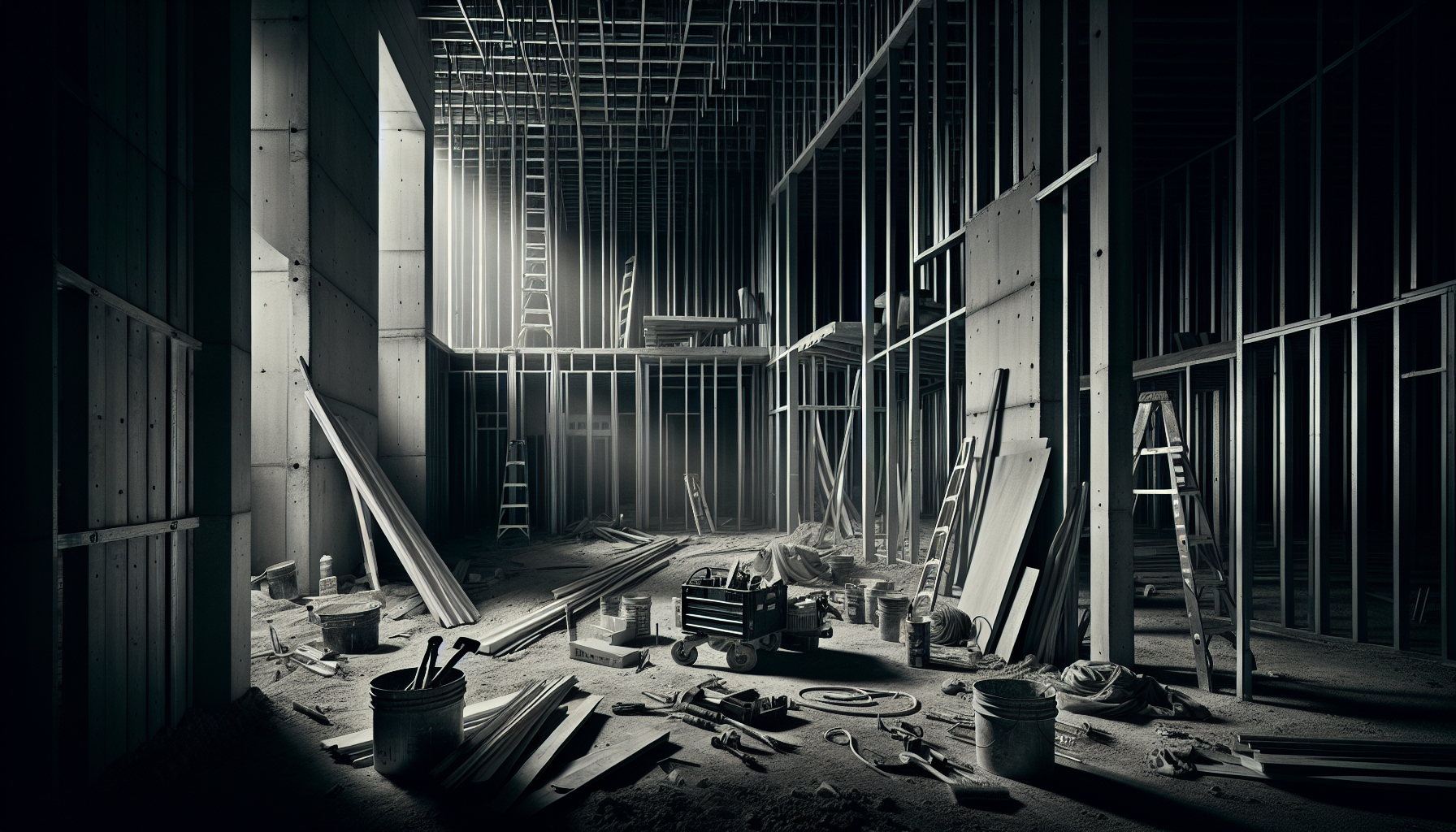
The mess. The first thing you notice isn’t what’s unfinished — it’s the disrespect. Paint cans left open on new LVP flooring. A 5-gallon bucket and tile-cutting supplies dumped in the living room. Tools scattered across bathroom vanities. A roll of underlayment sitting in the middle of the floor like someone was going to get to it and never did.
A clean jobsite means someone gives a damn. This jobsite screams the opposite.
The shortcuts. One entire bedroom was skipped. Everyone else gets new LVP. This room gets raw subfloor. Maybe he ran out of material. Maybe he forgot. Maybe he figured I wouldn’t notice until closing and by then he’d be paid.
The safety hazards. Exposed electrical wiring in the kitchen backsplash — bare copper visible where an outlet should be. Open junction boxes in every ceiling with wires dangling. This isn’t “we haven’t gotten to it yet.” This is “we don’t care enough to make it safe.”
The half-measures. Both bathrooms have tile work done — and it actually looks decent. Dark subway tile, decorative floor patterns. But there are no plumbing fixtures. No showerheads, no faucets, no tub spouts. It’s like building a car and skipping the engine. The part you can photograph looks great. The part that matters doesn’t exist.
The deck. Raw pressure-treated wood, no finish, no railing. The yard around it — dirt, debris, leftover materials. This is the exterior of a property that was supposed to be close to market-ready.
This Is a Character Problem, Not a Skills Problem
Here’s what bugs me most. David Tu clearly has some skill. The tile work is solid. The cabinet installation looks clean. The flooring that IS installed is done well.
This isn’t a contractor who can’t do the work. It’s a contractor who chose not to finish it. Chose to leave wiring exposed. Chose to skip a room. Chose to leave every room full of his mess.
And he made those choices because he knew I wasn’t watching.
That’s character. You can’t train it, you can’t contract around it, and you sure as hell can’t fix it with a second chance. I know because I tried.
The Uncomfortable Truth
Every out-of-state investor needs to hear this: your contractor’s behavior when you’re not around IS their real behavior. The version of them that shows up when you’re on site — that’s the performance. The version that leaves exposed wiring and skips entire rooms — that’s the person.
Most contractors are good people who do solid work regardless of who’s watching. But some aren’t. And the only way to know the difference is to check. Randomly. Independently. Consistently.
What I’m Doing Now
I’m bringing in a new contractor to finish Murray Ave. Every milestone will be independently verified before payment. I’m establishing a local contact who will do random walkthroughs — not scheduled, not announced, random.
And I’m sharing every bit of this publicly. Because the Instagram version of house flipping is a lie. The real version has exposed wiring, missing floors, and contractors who take advantage of your absence.
If even one investor reads this and puts verification systems in place before their first long-distance rehab, this whole mess was worth documenting.
Because what happens when your contractor knows you’re not around? You find out who they really are.
And sometimes, the answer is ugly.